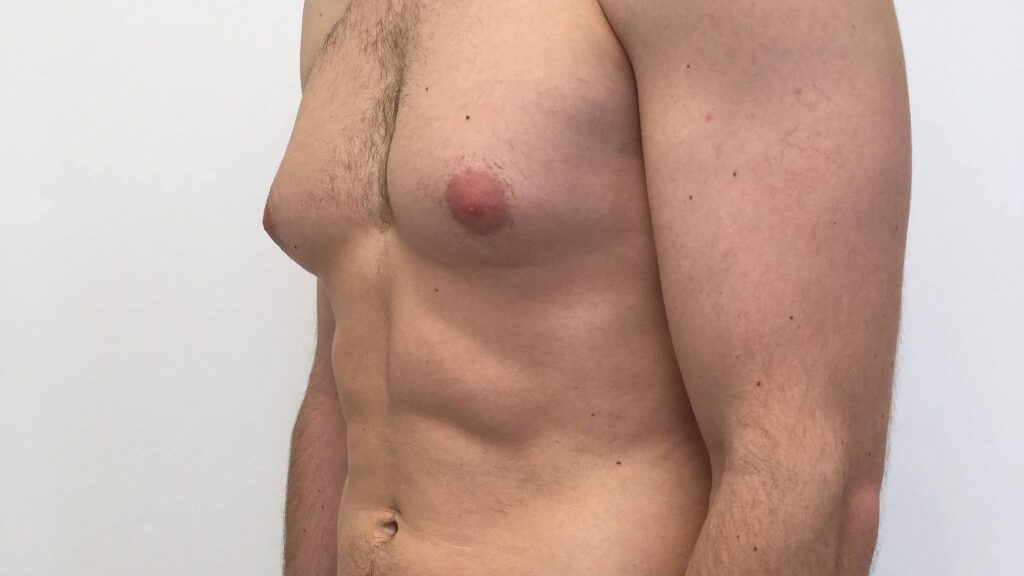
Gynaecomastia surgery in Tunisia: what should men living in Switzerland know?
In short: gynaecomastia surgery removes excess glandular tissue and fat from the male chest, usually through liposuction combined with a small incision at the edge of the areola. Before considering it, have your GP in Switzerland check the cause, because medication, hormones or anabolic steroids can be behind it, and a new lump always deserves a medical opinion. If surgery is the right answer, the indicative stay in Tunisia is 6 to 7 days, and most men are back at a desk job within a week or two and back to weight training after about six weeks, depending on the surgeon’s advice.
Gynaecomastia or just chest fat?
The word covers two different situations, and the difference changes the treatment:
- True gynaecomastia: enlargement of the breast gland itself, often felt as a firm, rubbery disc under the nipple.
- Pseudogynaecomastia: excess fat in the chest without gland enlargement, often linked to weight.
Many men have a mix of both. Fat responds to weight loss and liposuction; glandular tissue does not shrink with diet or exercise and usually has to be removed surgically. That is why some men who train hard still have « puffy nipples » they cannot get rid of.
Step one: find out why
Gynaecomastia is common and usually harmless, but it can have an underlying cause worth identifying. The NHS lists, among others:
- hormonal changes during puberty or after 50;
- excess weight;
- some medicines;
- certain conditions, such as an overactive thyroid, kidney disease or liver disease;
- drug use, including anabolic steroids.
See your GP before thinking about surgery, and promptly if you notice a hard lump, a lump on one side only, skin changes, nipple discharge or bleeding. Breast cancer in men is rare, but it exists, and these signs need to be checked.
Two practical consequences: in teenagers, gynaecomastia caused by puberty often settles by itself, so surgery is not usually the first answer. And if steroids or medication are the cause, operating without addressing them risks a recurrence.
How the operation works
| Situation | Usual technique |
|---|---|
| Mainly fat | Liposuction alone, through tiny incisions |
| Fat and gland | Liposuction plus removal of the gland through a small incision at the lower edge of the areola |
| Large chest with loose skin | As above, plus removal of excess skin, sometimes with repositioning of the nipple; scars are longer |
The operation is usually done under general anaesthesia. The removed gland can be sent for analysis. Your surgeon will tell you which technique suits your chest after examining you, and what scars to expect.
Recovery, step by step
- First days: tightness, bruising and swelling of the chest; a compression vest is worn day and night.
- First week: short walks, no lifting your arms forcefully above your head; most of this time is spent in Tunisia under supervision.
- Weeks 1 to 2: many men return to office work.
- Around 4 to 6 weeks: the compression vest is generally stopped and training resumes progressively, starting with cardio and lower body. Chest exercises come last, on your surgeon’s approval.
- Months 3 to 6: residual swelling disappears and the contour becomes final. Scars around the areola usually blend in well with time.
Possible complications include haematoma, fluid collection (seroma), contour irregularities, and changes in nipple sensation. Removing too much tissue can leave a hollow under the nipple, which is why a measured approach is preferable to an aggressive one.
Swiss insurance: covered or not?
When the operation is done for cosmetic reasons, basic insurance does not pay. In some situations with a recognised medical dimension, an insurer may agree to cover surgery, but only after a prior request examined by its medical adviser, and decisions are made case by case. If you think you might qualify, start with your GP and your insurer before booking anything. Note that planned surgery abroad is not reimbursed by basic insurance.
Why men choose Tunisia
For a procedure that is usually self-funded, cost weighs heavily. With Medespoir, gynaecomastia surgery in Tunisia costs around 60% less than in Switzerland. The package includes the pre-operative consultation and tests, the operation with the whole surgical team, the hospital stay, the compression garment, daily care at the hotel, the discharge check and operative report, the hotel on full board for you and one companion, all transfers, and remote follow-up once you are back in Switzerland.
The indicative stay is 6 to 7 days. Direct flights from Geneva and Basel-Mulhouse take about two hours; from Zurich, flights are direct or with a stopover depending on the season. Consultations and medical documents are in French. Flights, travel insurance and any care in Switzerland after your return are not included.
Request a free quote with a few photos of your chest: the quote is personalised and sent within 48 hours.
FAQ
Can gynaecomastia come back after surgery?
Removed glandular tissue does not grow back, but new enlargement can occur if the cause persists, such as steroid use, certain medicines or significant weight gain.
Will I have visible scars?
In most cases, the scars are small: tiny entry points for liposuction and a short incision at the edge of the areola. Skin removal for large chests leaves longer scars.
Can I go to the gym soon after surgery?
Light cardio is usually allowed after a few weeks. Weight training, especially chest exercises, generally waits until around six weeks and your surgeon’s approval.
Is there an age limit?
Surgery is usually considered once puberty is complete and the chest has been stable for some time. In adolescents, waiting is often advised because pubertal gynaecomastia frequently resolves on its own.
This article is for general information and does not replace a medical consultation. See your doctor if you notice a new lump in your chest.
Main sources: NHS, Gynaecomastia; American Society of Plastic Surgeons, Gynecomastia surgery; Federal Act on Health Insurance (KVG).