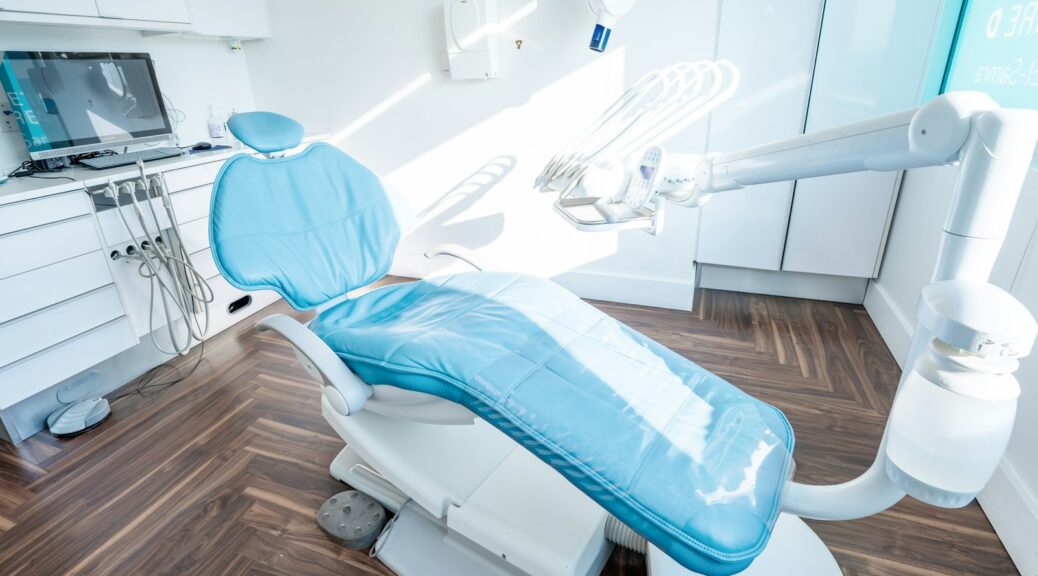
Dental implants in Tunisia: single implant, All-on-4, bone grafts and how long they last
In short: a dental implant is an artificial root, usually titanium, that carries a crown, a bridge or a full-arch prosthesis. In Tunisia, the treatment is usually done in two stages: the implants are placed on a first trip, and the final teeth follow on a second trip once the bone has healed, unless the bone allows immediate loading with temporary teeth. Whether you need one implant, a bridge on implants or an All-on-4 or All-on-6 arch depends on your bone, your gums and your general health, and a bone graft or sinus lift can change the timeline by several months. Swiss basic insurance does not pay for implants except in narrow cases, and Medespoir’s Tunisian treatment is around 60% cheaper than comparable work in Switzerland. What decides whether your implants last twenty years is mostly what happens afterwards: cleaning, check-ups and prevention of peri-implantitis with a dentist in Switzerland.
This article is general information. It does not replace a consultation or advice from a qualified dentist or doctor.
Contents
- What changed in 2025 and 2026
- Implant basics: what you are paying for
- Replacing one tooth
- Several missing teeth: bridges on implants
- A full arch: All-on-4, All-on-6 and alternatives
- Bone grafts and sinus lifts
- Titanium or zirconia?
- Health conditions and medicines
- How treatment in Tunisia is organised
- Implant surgery and the first two weeks
- Implants compared with other options
- How long implants last
- Peri-implantitis: prevention and treatment
- Insurance and cost for Swiss residents
- How to choose an implant team in Tunisia
- Four typical cases
- Sources
- FAQ
What changed in 2025 and 2026
Is there new guidance on implant infections?
Yes. In June 2025, the Academy of Osseointegration (AO) and the American Academy of Periodontology (AAP) published in the Journal of Periodontology the summary of their consensus conference on preventing and managing peri-implant diseases. It lists the main risk factors: a history of periodontitis, smoking, uncontrolled diabetes, poor plaque control and obesity, plus local factors such as an implant placed in the wrong position, a prosthesis that is hard to clean and thin or insufficient gum tissue around the implant. It recommends stepwise treatment, starting with non-surgical cleaning and control of risk factors, moving to surgery when needed, with removal of the implant as a last resort.
In Europe, the reference remains the clinical practice guideline of the European Federation of Periodontology (EFP), published in 2023 in the Journal of Clinical Periodontology. It is an S3 guideline, the highest methodological level, and its main message for patients is that prevention starts at the planning stage and continues for life with supportive care.
Did Switzerland change dental insurance?
No. On 14 June 2026, 70.16% of voters in the canton of Ticino rejected a popular initiative for compulsory dental insurance, after similar proposals had failed in Vaud, Geneva and Neuchâtel. On 29 September 2026, the Federal Office of Public Health announced that basic insurance premiums would rise by around 5% on average in 2027, with no change to dental cover. For implants, the conclusion for expats is unchanged: they remain largely a private expense.
| Date | Source | What it says | What it means for you |
|---|---|---|---|
| 2023 | EFP S3 guideline | Prevention and treatment of peri-implant diseases | Treat gum disease first; plan lifelong maintenance |
| June 2025 | AO/AAP consensus | Risk factors listed; stepwise treatment | Ask about your personal risk factors |
| 14 June 2026 | Ticino vote | Compulsory dental insurance rejected | Implants remain largely self-funded |
| 29 Sept. 2026 | FOPH | Premiums up about 5% in 2027; dental cover unchanged | Check supplementary dental policies separately |
Implant basics: what you are paying for
What are the parts of an implant?
Three. The implant itself is a screw placed in the jawbone, which acts as a root. The abutment is the connecting piece that comes through the gum. The crown, bridge or full prosthesis is the visible part you chew with. Each part can be made by different manufacturers and laboratories, and the quality of each counts. Medespoir explains the types and protocols in French on its page on implant types in Tunisia.
What is osseointegration?
It is the bonding of bone to the surface of the implant. It takes from a few weeks to a few months depending on the bone and the site, and it is what makes the implant solid. An implant that is loaded too early or too heavily in poor bone may fail to integrate. That is why the protocol, not just the implant, matters.
What is a 3D scan, and do I need one?
A cone-beam CT (CBCT) scan shows the height, width and density of the bone and the position of nerves and sinuses in three dimensions. For most implant treatments it is the basis of safe planning. If you already have a recent CBCT or panoramic X-ray from a Swiss dentist, send it with your request; it allows a more precise first plan.
Do implant brands matter?
Yes, for two reasons. Established systems have long clinical follow-up, and their components remain available for decades, which matters when a Swiss dentist needs to tighten a screw or replace a crown in ten years. Ask which system is used and whether parts are available in Switzerland. Medespoir states that it hands over the references in an implant passport.
What are immediate placement and immediate loading?
Immediate placement means putting the implant into the socket on the same day a tooth is removed, when there is no active infection. Immediate loading means fixing a temporary tooth or bridge onto the implant within days, when the implant is very stable. Both shorten treatment, but they are not suitable for everyone. In a classic protocol, the implant heals for a few months before the final teeth are made.
How long does the whole treatment take?
From the first consultation to the final teeth, a single implant in good bone usually takes a few months, mostly healing time during which you live normally in Switzerland. Treatment with a bone graft or sinus lift often takes six months to a year. Full-arch treatment with immediate loading gives you fixed temporary teeth within days, but the final bridge still comes after several months. If you have a date in mind, such as a wedding or a new job, tell the team at the start so the stages can be planned around it.
Replacing one tooth
Is an implant better than a bridge for one missing tooth?
Often, yes. A conventional bridge requires grinding down the two neighbouring teeth to hold crowns; if those teeth are healthy, that sacrifices sound enamel. An implant replaces the tooth without touching its neighbours and helps preserve the bone in that spot. A bridge can still be reasonable when the neighbouring teeth already need crowns, or when bone or health conditions make an implant difficult.
Can a front tooth be replaced on the same day?
Sometimes. When a front tooth must be removed and the bone and gum are favourable, an implant can be placed immediately with a temporary crown that does not bite, for appearance. The final crown follows after healing. The front teeth are the most demanding aesthetically: thin gums can show a grey shade through the tissue, and the gum line must match the neighbouring teeth. Discuss the expected appearance in detail.
What if I do nothing about a missing tooth?
Neighbouring teeth can tilt into the gap, the opposing tooth can over-erupt, and the bone at the site slowly shrinks. A missing back tooth may not bother you today but can make a future implant more complicated. That does not mean every gap needs an implant; it means the decision should be made knowingly.
Several missing teeth: bridges on implants
Do I need one implant per missing tooth?
No. Three missing teeth in a row can often be replaced by a bridge on two implants. This reduces surgery, cost and the need for bone in every position. The number of implants depends on the length of the gap, the bite forces and the bone available.
Screwed or cemented?
Implant crowns and bridges can be screwed onto the implants or cemented. Screw-retained work can be removed by a dentist for cleaning or repair, which is useful for patients who will be followed in another country. Excess cement around cemented crowns is one of the local factors associated with peri-implant inflammation. Ask which option is planned and why.
Can implants be combined with my natural teeth in one bridge?
Generally it is avoided, because natural teeth move slightly in their sockets while implants do not. Most dentists keep implant bridges and natural teeth separate.
A full arch: All-on-4, All-on-6 and alternatives
What is All-on-4?
A fixed full-arch bridge carried by four implants, the two back ones usually tilted to avoid the sinuses in the upper jaw or the nerve in the lower jaw and to use the available bone without grafting. In many cases a fixed temporary bridge is attached within days, and the final bridge is made after healing. All-on-6 uses six implants, which spreads the forces and gives some reserve if one implant ever fails. Medespoir describes both on its French implant dentistry page.
All-on-4 or All-on-6: which is better?
It depends on your bone and your bite. Six implants spread forces better and may suit a demanding situation or strong biting forces, especially in the upper jaw where bone is often softer. Four implants are often sufficient in the lower jaw. The decision should follow the scan, not a marketing name.
Are all my remaining teeth extracted for All-on-4?
In full-arch treatment, any remaining teeth in that jaw are usually removed, which is why the indication must be clear: teeth that are failing from advanced gum disease or decay, or an existing denture you cannot tolerate. If several of your teeth are still sound, keeping them and replacing the missing ones with individual implants or bridges may be the better choice. Be cautious if a clinic proposes extracting healthy teeth to fit a package.
What is the alternative to a fixed arch?
An overdenture: a removable denture that clips onto two to four implants. It is simpler, less costly, easier to clean and often very effective in the lower jaw, where a conventional denture tends to move. It is a good option for older patients or those with limited dexterity.
What about zygomatic implants?
When the upper jaw has very little bone, long zygomatic implants anchored in the cheekbone can avoid major grafting. They are complex procedures reserved for experienced teams and specific situations. If they are proposed, ask about the surgeon’s experience and the follow-up plan.
| Situation | Common solutions | Usual number of trips to Tunisia | Key point |
|---|---|---|---|
| One missing tooth | Single implant and crown | Often two | Neighbouring teeth untouched |
| Several teeth in a row | Bridge on two or more implants | Often two | Fewer implants than teeth |
| Full arch, enough bone | All-on-4 or All-on-6 | Usually two (temporary bridge, then final) | Healthy teeth should not be sacrificed |
| Full arch, lower jaw, simpler need | Overdenture on implants | Usually two | Removable, easy to clean |
| Insufficient bone | Graft or sinus lift first | Often three | Adds several months |
The number of trips is indicative; your plan depends on the scan and the protocol chosen. Medespoir’s own page states that treatment often takes place in two stages, with some steps possible remotely.
Want a treatment plan for your mouth? Send a recent panoramic X-ray or 3D scan if you have one, photographs and the list of teeth concerned. You receive a free, personalised quote within 48 hours, with the plan and the number of stays. Treatment in Tunisia is around 60% cheaper than comparable work in Switzerland.
Bone grafts and sinus lifts
Why would I need a bone graft?
After a tooth is lost, the bone shrinks, particularly in width, and most in the first months. Gum disease, long-term dentures and infections also destroy bone. An implant needs enough bone around it to be stable and to support the gum. When there is not enough, the bone can be rebuilt.
What types of bone graft exist?
- Socket preservation: filling the socket with graft material when a tooth is removed, to limit shrinkage.
- Guided bone regeneration: adding graft particles under a membrane at the time of implant placement or before it.
- Block grafts: a piece of bone, often from the patient’s own jaw, fixed to rebuild a larger defect; more invasive and longer to heal.
Graft materials can come from your own body, from human or animal donors processed for medical use, or be synthetic. Each has its advantages; ask which one is planned and why.
What is a sinus lift?
In the upper back jaw, the maxillary sinus often expands downwards after teeth are lost, leaving little bone height. A sinus lift raises the sinus membrane and places graft material underneath. It is done either through a small window in the side of the jaw (lateral approach) for large gains, or through the implant hole itself (crestal approach) for small gains, sometimes at the same time as the implant.
How much time does a graft add?
Typically several months before the implant can be placed or loaded, depending on the size of the graft. For a Swiss resident, that can mean an additional trip. Some grafts are done at the same time as the implant, which saves a stage. Your plan should state the expected healing times.
Can I fly after a sinus lift?
Pressure changes and blowing your nose can stress the sinus membrane in the first days. Your dentist will give instructions: no nose blowing, sneezing with your mouth open, and sometimes medication. The timing of the flight home should be agreed with the team.
Is a graft painful?
Swelling and discomfort for a few days are normal, more after larger grafts or block grafts. Painkillers, cold compresses and a soft diet usually suffice. Bruising on the cheek can appear and fade over a week or two.
Titanium or zirconia?
Why is titanium the standard?
Titanium has decades of clinical data, excellent osseointegration and many designs, including two-piece systems that allow flexible prosthetic choices. Most implants placed worldwide are titanium or titanium alloys.
When is zirconia considered?
Zirconia is a white ceramic. It can be useful with very thin gums at the front, where a grey shade might show, or for patients who prefer a metal-free solution. Its long-term data are shorter, and designs are fewer, many being one-piece. True titanium allergy is very rare. Medespoir’s page on implant types describes the same trade-offs.
| Criterion | Titanium | Zirconia |
|---|---|---|
| Clinical track record | Very long, global reference | Shorter, growing |
| Appearance | Metal, hidden under the gum | White; useful with thin gums |
| Design options | Many; one- and two-piece | Fewer; often one-piece |
| Typical use | Most cases | Selected aesthetic or metal-free requests |
What about the crown material?
Crowns on implants are usually made of zirconia, lithium disilicate or porcelain fused to metal. Full-arch bridges may be acrylic on a metal frame or monolithic zirconia. Each balances strength, appearance, repairability and cost differently. Ask what the final material will be, not only the temporary one.
Health conditions and medicines
Can I have implants if I have diabetes?
Yes, if it is well controlled. Poorly controlled diabetes slows healing and increases the risk of infection and peri-implantitis. Bring a recent HbA1c value.
Does smoking matter?
Very much. Smoking increases the risk of implant failure and of peri-implantitis. Most dentists strongly encourage stopping, at least around surgery and ideally for good. Vaping has not been shown to be harmless for gums.
I take osteoporosis medicines. Is that a problem?
It must be discussed. Bisphosphonates and denosumab are associated with a rare but serious condition called medication-related osteonecrosis of the jaw, particularly at high doses used in cancer treatment. For osteoporosis doses the risk is low but not zero. Your dentist will weigh the medicine, the dose and the duration, and may consult your prescribing doctor. Never stop such a medicine on your own.
What about blood thinners and radiotherapy?
Blood thinners are usually managed rather than stopped, in agreement with the prescribing doctor. Radiotherapy to the head and neck changes the bone and requires specialised planning. Heart conditions, immune suppression and some autoimmune diseases also need to be declared.
I have gum disease. Can I still have implants?
Yes, but the gum disease must be treated and stable first. A history of periodontitis is one of the strongest risk factors for peri-implantitis, according to both the EFP guideline and the AO/AAP consensus. This is often best done by a Swiss dentist or hygienist before you travel.
How treatment in Tunisia is organised
When should I contact the team, and what should I send?
As early as possible, ideally a few months before you would like to start. Send a recent panoramic X-ray or 3D scan if you have one, photographs of your smile and teeth, the list of missing or failing teeth, your medical history and your medicines. If you have gum disease, mention any treatment you have had. The more complete the file, the more precise the first plan and the fewer surprises at the consultation in Tunisia.
What happens on the first trip?
Examination, 3D scan if needed, confirmation of the plan, any extractions, grafts and the placement of the implants. With immediate loading, temporary teeth are fitted before you leave. You return to Switzerland with written instructions and a soft diet for the first days.
And on the second trip?
After healing, impressions or digital scans are taken, the final crown or bridge is tried in and fitted, and the bite is adjusted. Medespoir’s French page on implant types says treatment often takes place in two stages, with some steps possible remotely. Your quote should state how many trips are planned and roughly how long each lasts.
Who is the dentist?
Medespoir’s dental partner in Tunisia is presented on its French dentist page, with her training in oral surgery and implantology. Ask who will perform the surgery, who will make the prosthesis and which laboratory is used.
What should I bring back to Switzerland?
- The implant passport or a list with the manufacturer, model, diameter and length of each implant, and the abutment references.
- Copies of the X-rays and scans before and after treatment.
- A written report of what was done, including any graft materials used.
- Instructions for cleaning and the recommended check-up schedule.
Documents are generally in French; your Swiss dentist will be able to work with them.
What if something happens between trips?
A loose temporary tooth, sore gum or swelling can be assessed by a dentist in Switzerland, at your own cost, and reported to the team. Severe swelling, fever or difficulty swallowing require prompt care in Switzerland. The remote follow-up included in Medespoir’s service lets you send photographs and questions.
Implant surgery and the first two weeks
Is implant placement painful?
The placement itself is done under local anaesthesia, and most patients feel pressure and vibration rather than pain. Placing one implant in good bone often takes less than an hour. Full-arch treatment with extractions takes several hours, and sedation may be offered. Ask which option is planned, because sedation means you need someone to accompany you afterwards and must not eat beforehand.
What does the first week feel like?
Swelling usually peaks around the second or third day and then subsides. Discomfort is typically managed with ordinary painkillers prescribed by the team. Bruising on the cheek or under the jaw is possible after grafts or full-arch work. Most people with an office job feel able to work within a few days after a single implant, and after about a week after full-arch treatment.
What can I eat?
Soft, lukewarm food for the first days: soups that are not too hot, yoghurt, eggs, mashed vegetables, fish, pasta. After full-arch treatment with a temporary bridge, a soft diet is usually required for several weeks or until the final bridge, because the implants must not be overloaded while they integrate. Hard bread crusts, nuts and sticky sweets wait. Your team will give you a precise list.
Which medicines are usually prescribed?
Painkillers, a mouth rinse and, depending on the case and the dentist’s judgement, antibiotics. Take them exactly as prescribed and bring enough for the journey. Tell the team about every medicine you already take, including over-the-counter ones and supplements, to avoid interactions.
How do I clean my mouth after surgery?
Gently. You usually avoid brushing directly on the wound for the first days, use the prescribed rinse, and then brush carefully with a soft brush. Do not smoke, do not drink through a straw in the first days, and avoid vigorous rinsing that can disturb the healing clot. Stitches are either dissolvable or removed during the stay; ask which.
When should I worry?
Swelling that increases after the third day, fever, a bad taste or discharge, persistent bleeding, numbness of the lip or chin that does not wear off after the anaesthetic, or a temporary bridge that becomes loose. Contact the team and, if you are already home, a dentist in Switzerland. Numbness after lower jaw surgery needs prompt assessment, as it can indicate pressure on the nerve.
Implants compared with other options
Is a removable partial denture a reasonable choice?
Yes, for some people. It is the least expensive option, needs no surgery and can be made quickly. Its drawbacks are movement while eating, clasps that can show and put strain on the teeth that carry them, and a feeling of bulk. Some people adapt well; others never wear it. It can also be a temporary solution while bone heals.
When is a conventional bridge better than an implant?
When the neighbouring teeth already have large fillings or crowns and would benefit from being covered anyway, when bone is insufficient and the patient does not want grafts, or when health conditions make surgery inadvisable. A well-made bridge can last many years, but if one supporting tooth fails, the whole bridge is affected.
Can orthodontics close a gap instead?
Occasionally, for example when a tooth is missing from birth or when moving teeth would improve the bite anyway. It takes months and is not suitable for most adults with a single missing back tooth, but it is worth asking about in younger adults.
Are implants suitable at any age?
For adults, there is no upper age limit as such. What matters is general health, bone quality and the ability to clean around the implants. In older patients with limited dexterity, a simpler solution, such as an overdenture, is often more practical than a complex fixed bridge. In young adults, implants are placed only when jaw growth is complete.
| Option | Surgery | Effect on neighbouring teeth | Main advantages | Main limits |
|---|---|---|---|---|
| Implant and crown | Yes | None | Fixed; preserves bone; independent of other teeth | Healing time; needs bone; maintenance |
| Conventional bridge | No | Neighbours are ground for crowns | Quick; no surgery | Sacrifices enamel; linked teeth |
| Removable partial denture | No | Clasps on some teeth | Least costly; quick | Moves; bulk; strain on clasp teeth |
| Overdenture on implants | Yes, limited | None | Stable; easy to clean | Removable; clips wear and need replacing |
How long implants last
Is an implant for life?
The implant itself can last for decades; studies commonly report that the large majority of implants are still in place after ten years. The crown or bridge on top wears and may need repair or replacement after some years, like any prosthesis. Full-arch bridges in particular need periodic maintenance, such as replacing worn teeth on an acrylic bridge.
What shortens an implant’s life?
- Peri-implantitis, the main long-term threat.
- Smoking and poorly controlled diabetes.
- Grinding or clenching without a night guard.
- A prosthesis that is hard to clean or an implant in a poor position.
- Missing check-ups for years.
How often should I see a dentist afterwards?
At least once a year, and often every three to six months with a hygienist, depending on your risk. The EFP guideline calls this supportive care: regular assessment of the tissues around each implant, professional cleaning and reinforcement of home care. In Switzerland, this is a routine part of dental practice.
What does daily cleaning involve?
Brushing twice a day, plus interdental brushes sized for the spaces around implants, or a water flosser for full-arch bridges. Your team should show you how to clean under a fixed bridge before you leave Tunisia.
Peri-implantitis: prevention and treatment
What is peri-implantitis?
An inflammation of the tissues around an implant with loss of the supporting bone. It is preceded by peri-implant mucositis, an inflammation of the gum only, which is reversible with good cleaning. Signs include bleeding when brushing, swelling, pus and, later, deeper pockets and visible threads.
Who is most at risk?
People with a history of periodontitis, smokers, people with uncontrolled diabetes or poor plaque control, and people whose prosthesis is difficult to clean or whose implant was placed in a poor position. The AO/AAP consensus of 2025 also lists obesity and thin or insufficient gum tissue.
How is it treated?
Step by step: professional cleaning of the implant surface, improved home care and control of risk factors; then, if needed, surgery to clean the implant and sometimes regenerate bone; and, as a last resort, removal of the implant. Early treatment is far more successful, which is why bleeding around an implant should never be ignored.
Who treats it if my implant was placed in Tunisia?
Usually your dentist or a periodontist in Switzerland, because treatment requires regular visits. They need to know the implant system; hence the importance of the implant passport. The cost of such treatment in Switzerland is at your own expense or covered by a supplementary policy if you have one.
Insurance and cost for Swiss residents
Does basic insurance pay for implants?
Only in narrow cases. Under the Swiss Health Insurance Act and its ordinance on benefits (KLV/OPAS), basic insurance pays for dental treatment when it is caused by a severe, unavoidable disease of the chewing system, or is required to treat certain serious general illnesses, and accidents are covered by accident insurance. Tooth loss from decay or ordinary gum disease is not covered. Planned treatment abroad is not reimbursed by basic insurance.
And supplementary dental insurance?
Supplementary policies are private contracts with their own limits, often a percentage of costs up to an annual ceiling, and waiting periods. Many reimburse treatment only in Switzerland or within limits abroad. Read the conditions and ask in writing before you start; changing insurer is possible for the following year before the 30 November deadline for basic insurance, but supplementary policies have their own notice periods and health questions.
How much cheaper is Tunisia?
Medespoir’s price page indicates that treatment in Tunisia is around 60% cheaper than in Switzerland. The exact figure depends on the number of implants, any grafts, the prosthesis material and the number of trips. It is given in a free, personalised, named quote within 48 hours.
Can I deduct dental costs from my taxes?
Possibly. For the federal direct tax, illness costs you pay yourself, including dental treatment, can be deducted to the extent that they exceed 5% of your net income, and the cantons have similar rules with their own details. Treatment abroad is not excluded as such. Keep all invoices and proof of payment, and check with your cantonal tax office or adviser, as practice differs between cantons.
What is not included?
Flights, personal spending, any extension of your stay for convenience, the care you receive in Switzerland after your return, travel insurance (recommended) and bank charges are at your own expense. The quote lists what is included for your case.
Is the cheapest offer a good idea?
Rarely for implants. Cheap offers sometimes mean unknown implant brands, no 3D planning, rushed loading or prostheses that are hard to clean. Since implants are expected to last decades, compare the system, the plan, the materials and the follow-up first.
How to choose an implant team in Tunisia
Which questions should I ask?
- Who places the implants, and what training in implantology do they have?
- Will a 3D scan be done before placement?
- Which implant system, and are its components available in Switzerland?
- Classic or immediate loading, and why for my case?
- What is the final prosthesis material, and is it screw-retained?
- How many trips, how long each, and what happens in between?
- What documents will I receive?
What are the warning signs?
- A plan to extract several healthy teeth to fit a full-arch package.
- No imaging before a fixed plan and price.
- Vague answers about the implant brand.
- Final teeth promised in one short trip for every patient.
- No answer on who to contact if something goes wrong once you are home.
Should my Swiss dentist be involved?
Ideally, yes. A Swiss dentist can treat gum disease before you travel, take X-rays, and handle long-term maintenance. Some Swiss dentists are reluctant to take over work done abroad; ask yours in advance, or find a hygienist or dentist who agrees to follow you. Read Medespoir’s French dental care guide for an overview.
Four typical cases
Anna, 45, Geneva: one molar
Anna lost a lower molar after a fracture. The bone is sufficient. Plan: a single titanium implant on the first trip, a zirconia crown on the second trip a few months later. Her Geneva hygienist sees her twice a year.
Peter, 58, Zurich: three teeth at the back
Peter is missing three upper teeth on one side, with low bone height under the sinus. Plan: a sinus lift and later two implants carrying a three-tooth bridge. Three trips over about a year. He accepts the longer timeline because a removable partial denture bothers him.
Maria, 66, Basel: failing upper teeth
Maria’s upper teeth are loose after years of periodontitis. After a check with a periodontist in Basel, the remaining teeth cannot be saved. Plan: extractions and All-on-6 with a fixed temporary bridge in the first stay, the final bridge after healing. Her Basel periodontist agrees to follow her implants.
Jean, 72, Lausanne: a loose lower denture
Jean’s lower denture moves when he eats. He takes osteoporosis tablets. After consultation with his doctor, the team proposes an overdenture on two implants, a simpler option that suits his needs and is easy to clean.
Ready to plan your implants? Ask for a free quote with your X-rays and photographs. You receive a personalised, named plan within 48 hours. For a broader view including veneers and whitening, read our 2026 guide to dental treatment in Tunisia.
Sources
- EFP, S3 guideline on prevention and treatment of peri-implant diseases, 2023: efp.org
- AO and AAP, consensus on peri-implant diseases, June 2025: perio.org
- Swiss Dental Association (SSO), on the Ticino vote: sso.ch
- Swissinfo, 2027 health insurance premiums: swissinfo.ch
- Federal Act on Health Insurance (KVG/LAMal): fedlex.admin.ch; Health Care Benefits Ordinance (KLV/OPAS): fedlex.admin.ch
- Medespoir, implant types in Tunisia: types-implants-dentaires-tunisie.php
FAQ
How many trips to Tunisia do dental implants need?
Often two: placement, then the final teeth after healing. A bone graft or sinus lift can add a trip. Your quote states the plan.
Can I get fixed teeth in one day with All-on-4?
Often a fixed temporary bridge is attached within days, if the implants are stable. The final bridge follows after healing.
Is All-on-6 better than All-on-4?
Not always. Six implants spread forces better, which helps in softer bone or with strong bites; four are often sufficient in the lower jaw.
Will my Swiss insurer pay for implants placed in Tunisia?
Basic insurance does not. Some supplementary dental policies pay part of treatment abroad; check the conditions in writing.
Can I fly home after implant surgery?
Usually yes, after the check by the team. After a sinus lift, follow the specific instructions about pressure and nose blowing.
Are zirconia implants better than titanium?
Not in general. Titanium has the longest track record; zirconia can help with thin gums or metal-free preferences.
What is the biggest long-term risk?
Peri-implantitis. Regular check-ups, good cleaning and not smoking are the best protection.
Who maintains my implants in Switzerland?
A dentist or hygienist of your choice, ideally agreed before you travel. Bring the implant passport and X-rays.