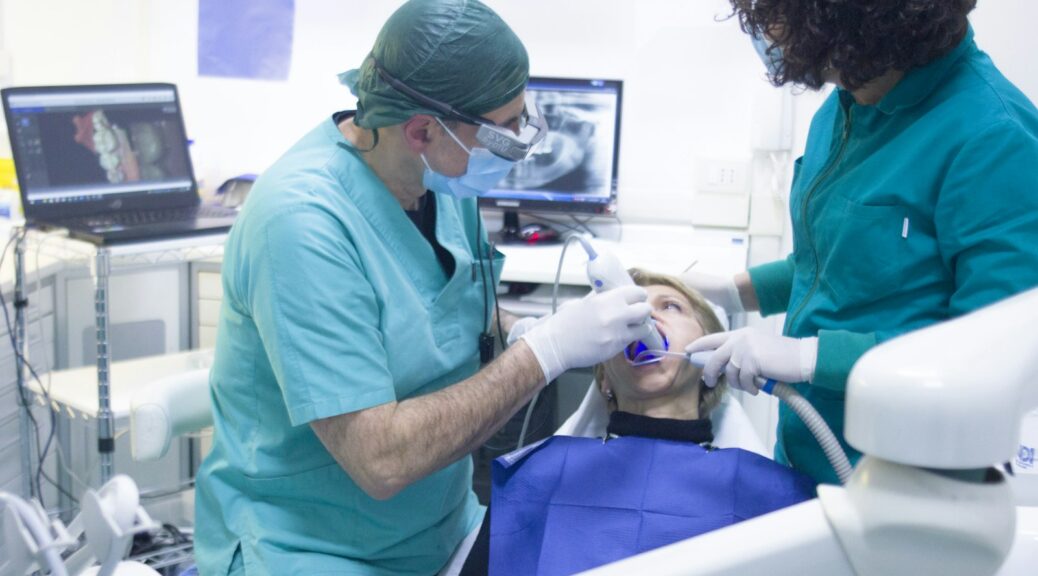
Crowns, bridges or dentures in Tunisia: which material and which solution for you?
In short: A crown restores a damaged tooth, a bridge replaces a missing tooth by resting on its neighbours, and a removable denture replaces several teeth with an appliance you take out. The right choice depends on what remains of your teeth, the state of your gums and bone, your bite and how many stays you can plan, not on a catalogue. Zirconia and glass-ceramic (lithium disilicate) have largely replaced metal-ceramic for visible teeth, while metal-framed partial dentures (often called « chrome-cobalt » or, in French, « stellite ») remain a solid, affordable option when many teeth are missing. In Tunisia, Medespoir’s prices are roughly 60% lower than in Switzerland, and a bridge on teeth that are already crowned can often be completed in a single stay of a few days. This guide explains each option, when to choose it, and how to plan the treatment from Switzerland.
Updated November 2026. This article is general information and does not replace a dental examination: only a dentist who has seen your X-rays can propose a treatment plan.
Contents
- What changed in 2025 and 2026?
- Damaged tooth, missing tooth, many missing teeth: three different problems
- Restoring a damaged tooth: from filling to crown
- Crown materials: zirconia, ceramic, metal-ceramic
- Bridges: classic, adhesive and on implants
- Removable dentures: partial, metal-framed, complete
- When to choose what
- How a treatment is planned and how many stays it needs
- How long do crowns, bridges and dentures last?
- After treatment: what is normal and what is not
- What determines the cost and what to ask
- Five typical situations
- Crowns, bridges and dentures in Tunisia from Switzerland
- Sources
- Frequently asked questions
What changed in 2025 and 2026?
Nothing revolutionary in the materials themselves, but several decisions affect how people in Switzerland pay for and plan prosthetic dentistry.
Will Swiss insurance pay for dental work in the future?
Not in the foreseeable future. On 14 June 2026, voters in the canton of Ticino rejected a popular initiative for compulsory dental insurance by 70.16%. In a press release dated 15 June 2026, the Swiss Dental Association (SSO) welcomed the result and recalled that similar proposals had already been rejected in Vaud, Geneva and Neuchâtel. Crowns, bridges and dentures therefore remain largely a private expense for adults in Switzerland.
Do higher health insurance premiums change anything for dental care?
Not for the cover itself. On 29 September 2026, the Federal Office of Public Health (FOPH) announced that basic insurance premiums will rise by around 5% on average in 2027, without any change to dental cover. If you are reviewing a supplementary dental policy, read the waiting periods, annual ceilings and exclusions carefully: prosthetic work is often limited, and supplementary policies are private contracts with their own notice periods.
What happened to amalgam fillings?
They are being phased out worldwide. EU law has prohibited the use and export of mercury dental amalgam since 1 January 2025. At the sixth Conference of the Parties to the Minamata Convention on Mercury, held in Geneva from 3 to 7 November 2025, countries agreed to end the manufacture, import and export of dental amalgam, with the ban taking effect on 1 January 2035 according to the European Commission. For patients, this matters indirectly: many people with large old amalgam fillings now ask whether to replace them. A sound amalgam filling does not need to be removed for its own sake; replacement is considered when the filling or the tooth is failing, and a large defect may then need an onlay or a crown rather than a new filling.
What does digital dentistry change for patients?
It shortens some steps. Intraoral scanners replace many traditional impressions, and crowns can be designed and milled by computer (CAD/CAM) from zirconia or ceramic blocks. This improves precision and can reduce the number of appointments, which matters for anyone travelling for treatment. It does not replace the clinical steps that need time: treating gum disease, letting an extraction site heal or checking the bite.
| Date | Source | What it means for you |
|---|---|---|
| 1 Jan. 2025 | EU mercury regulation | Dental amalgam no longer used in the EU |
| 3-7 Nov. 2025 | Minamata Convention COP6, Geneva | Global end of amalgam manufacture and trade from 2035 |
| 14-15 June 2026 | Ticino vote, SSO release | No compulsory dental insurance; prosthetic work remains private |
| 29 Sept. 2026 | FOPH | Premiums up around 5% in 2027; dental cover unchanged |
Damaged tooth, missing tooth, many missing teeth: three different problems
Medespoir’s dental care guide (in French) puts it simply: the implant replaces the root, the crown and the bridge restore, the veneer corrects appearance and the denture replaces several teeth. Each answers a different question.
My tooth is still there but broken or heavily filled. What are my options?
The question is how much solid tooth remains and whether the root is healthy. Depending on the answer, a filling, an inlay or onlay, a partial crown or a full crown is used. If the nerve is infected, root canal treatment comes first. If the root is cracked or too weak, the tooth may need to be extracted and the problem becomes a missing tooth.
One tooth is missing. Should I replace it?
Usually yes, especially for back teeth. When a gap stays empty, the neighbouring teeth tilt into it, the opposing tooth grows towards it, and the bone shrinks where no root stimulates it any more. The options are an implant, a bridge or a removable partial denture. For implants in detail, see our guide on dental implants in Tunisia.
Several or all teeth are missing. What then?
Then the choice is between a removable denture (partial or complete), a fixed bridge on implants, or a denture clipped onto implants. The decision depends on the bone, your health, your budget and how important a fixed solution is to you.
Restoring a damaged tooth: from filling to crown
The guiding principle is conservation: keep as much natural tooth as possible. A natural tooth, even restored, keeps qualities no prosthesis reproduces, such as the ligament that cushions chewing forces and the sensation of pressure.
What is the difference between an inlay, an onlay and a crown?
An inlay fills a cavity inside the tooth, like a precise, laboratory-made filling. An onlay also covers one or more cusps, the raised points of a back tooth. A partial crown covers most of the chewing surface but spares the healthy walls. A full crown covers the whole visible part of the tooth. Each step up removes more tooth tissue, so the least invasive option that will last is preferred.
When is a full crown really necessary?
When a tooth is heavily broken down, cracked, has lost large walls, or has had root canal treatment on a back tooth that must withstand strong chewing forces. A crown is also used to restore an implant. A crown is not the right answer for a healthy tooth that is simply discoloured or slightly misshapen: veneers, whitening or bonding are much less invasive in that case.
Why are crowns on healthy teeth a problem?
Because preparing a tooth for a full crown removes a significant amount of enamel and dentine, permanently. Some low-cost « smile makeovers » abroad have placed full crowns on rows of healthy teeth to achieve a uniform white look quickly, which increases the risk of nerve damage, sensitivity and future root canal treatment. A careful dentist will propose crowns only where they are justified and will explain why. Our guide on veneers, whitening and smile makeovers in Tunisia covers the cosmetic alternatives.
What is a post and core?
When a tooth has had root canal treatment and little remains above the gum, the dentist may place a post inside the root and build up a core to support the crown. Today, fibre posts bonded inside the root are common. The success of a crown on such a tooth depends on how much sound tooth remains around the base; dentists call this the « ferrule ». If too little remains, an extraction and implant may be more predictable.
Does a crowned tooth still need care?
Yes. The tooth under a crown can still decay at the margin, where the crown meets the tooth, and the gum around it can become inflamed. Daily cleaning, including between the teeth, and regular check-ups remain essential.
Crown materials: zirconia, ceramic, metal-ceramic
Material choice depends on the tooth’s position, the forces it must bear, the colour of the neighbouring teeth, the space available and the opposing teeth. There is no single best material.
| Material | Strengths | Typical use | Points to discuss |
|---|---|---|---|
| Monolithic zirconia | Very strong, metal-free, can be thin | Back teeth, bridges, patients who grind | Less translucent; must be polished well to protect opposing teeth |
| Layered zirconia | Strong core with a cosmetic ceramic layer | Visible teeth needing strength | The outer layer can chip |
| Lithium disilicate (pressed ceramic, e.g. e.max) | Excellent translucency and appearance | Front teeth, premolars, partial crowns | Less suited to long bridges or heavy grinding at the back |
| Metal-ceramic | Long clinical track record, robust | Back teeth, bridges, tighter budgets | Metal can show as a grey line if the gum recedes |
| Full metal (gold alloy) | Very durable, gentle on opposing teeth, minimal preparation | Back teeth, patients who grind | Not tooth-coloured; less requested today |
This table follows the material comparison in Medespoir’s dental care guide, which lists zirconia, pressed ceramic, layered zirconia, metal-ceramic and metal as the main options.
Is zirconia better than porcelain?
It is stronger; whether it is better depends on the tooth. For a molar in a patient who grinds, monolithic zirconia is often the most reliable choice. For an upper front tooth next to natural teeth, lithium disilicate or layered zirconia usually looks more natural. Many treatment plans mix materials.
Can I be allergic to crown materials?
True allergies to zirconia or ceramic are extremely rare. Some people react to certain metals, particularly nickel, which is used in some non-precious alloys. If you have a known metal allergy, mention it so that a metal-free or suitable alloy is chosen.
Will my crown match my other teeth?
It should, if the colour is chosen carefully in daylight and before any whitening. Crowns do not change colour with whitening, so if you want whiter teeth, whiten first, wait for the shade to stabilise, then make the crowns. Tell the dentist if you plan to whiten later.
Bridges: classic, adhesive and on implants
A bridge is a fixed prosthesis that replaces one or more missing teeth by resting on supports on either side of the gap. It is cemented and cannot be removed by the patient.
How does a classic bridge work?
The teeth on either side of the gap (the abutments) are prepared for crowns. The bridge consists of these crowns joined to one or more artificial teeth (the pontic) that fill the gap. Its advantages: no surgery, a relatively short treatment and a fixed result. Its drawback: the abutment teeth must be reduced. Medespoir’s guide notes that when these teeth are already crowned or heavily restored, this drawback largely disappears and the bridge becomes very relevant.
What is an adhesive (Maryland) bridge?
An adhesive bridge replaces a single missing tooth, usually at the front, with an artificial tooth bonded to the back of a neighbouring tooth by a thin wing. It requires little or no preparation. It is useful for young people waiting for an implant, or when the neighbouring teeth are healthy and the bite allows it. It can come unstuck and must then be re-bonded.
What is a cantilever bridge?
A bridge supported on one side only. It is used in selected situations, often at the front with light forces. At the back, where chewing forces are strong, it carries a higher risk of mechanical problems.
Bridge or implant: which is better for one missing tooth?
When the neighbouring teeth are healthy, an implant is generally preferred, because it does not touch them and it stimulates the bone. When the neighbouring teeth already need crowns, a bridge can solve two problems at once. Other factors include bone volume, gum health, smoking, diabetes control, the time you have and the number of stays you can plan. An implant usually needs two stays several months apart; a bridge on already restored teeth can often be done in one.
What is a bridge on implants?
When several teeth are missing in a row, two or more implants can support a bridge, avoiding the need for one implant per tooth. For a full arch, concepts such as All-on-4 or All-on-6 use four to six implants to support a fixed bridge. These are covered in our implant guide.
How do I clean under a bridge?
With a floss threader, special floss with a stiff end, or small interdental brushes that pass under the pontic. Food and plaque collect there, and poor cleaning leads to decay of the abutment teeth and gum disease, the two main reasons bridges fail.
Removable dentures: partial, metal-framed, complete
Removable dentures have an image problem, but they remain the right answer in many situations: when many teeth are missing, when bone or health do not allow implants, when budget matters, or as a temporary solution during a longer plan.
What types of partial denture exist?
- Acrylic partial denture: a pink plastic base with artificial teeth, held by wire clasps. Quick and inexpensive to make, but bulkier and less stable. Often used as a temporary solution.
- Metal-framed partial denture (cobalt-chrome, often called « stellite » in French-speaking countries): a thin cast metal framework that rests on the remaining teeth and holds the artificial teeth. It is thinner, more stable and more comfortable than an acrylic denture, and it spreads chewing forces better.
- Flexible partial denture: made of a nylon-type material, with gum-coloured clasps that are less visible. Comfortable, but harder to adjust or repair, and not suitable for every situation.
What does a complete denture involve?
When all the teeth of an arch are missing, a complete denture rests on the gums and, for the upper jaw, the palate. The upper denture is usually held well by suction; the lower one is often less stable because the tongue and the shape of the jaw move it. Several appointments are needed for impressions, bite recording, a try-in of the teeth and adjustments. The first weeks require practice in speaking and chewing.
Can implants improve a removable denture?
Yes, often dramatically. Two implants in the lower jaw with press-stud or bar attachments can turn a loose lower denture into a stable one that still comes out for cleaning. This is called an implant-retained overdenture. It is a middle way between a conventional denture and a fully fixed bridge on implants.
What is an immediate denture?
A denture prepared in advance and fitted on the day remaining teeth are extracted, so that you never leave without teeth. As the gums heal and shrink over the following months, it becomes loose and needs relining or replacing. It is common in treatment plans that end with implants or a definitive denture.
How long does it take to get used to a denture?
Typically a few weeks. Speech improves quickly; chewing takes longer. Sore spots are normal at first and are corrected by adjustments, which is one reason a removable denture should not be fitted at the very end of a trip without time for follow-up.
When to choose what
| Your situation | Often the most suitable option | Why |
|---|---|---|
| Broken or heavily filled tooth, healthy root | Onlay, partial or full crown | Keeps the tooth; crown only if needed |
| Back tooth after root canal treatment | Crown or onlay covering the cusps | Protects against fracture |
| One missing tooth, healthy neighbours | Implant (or adhesive bridge at the front) | Neighbours stay untouched |
| One missing tooth, neighbours already crowned or heavily filled | Classic bridge | Main drawback disappears; one stay |
| Several missing teeth in one area | Bridge on implants or metal-framed partial denture | Depends on bone, budget and preference |
| Many missing teeth, scattered | Metal-framed partial denture | Stable, repairable, accessible |
| No teeth left in one jaw | Complete denture, overdenture on implants or fixed full-arch bridge | Fixed or removable depending on bone and health |
| Healthy but unattractive teeth | Whitening, bonding or veneers rather than crowns | Much less invasive |
Which factors can rule out a fixed solution?
Untreated gum disease, poor oral hygiene, very little bone without the possibility of grafting, uncontrolled diabetes, heavy smoking, certain medicines affecting bone (such as some treatments for osteoporosis or cancer), and limited dexterity for cleaning. These do not always rule out treatment, but they change the plan and the order of steps.
What if I grind my teeth?
Grinding (bruxism) puts heavy forces on crowns and bridges and is one of the main causes of chipped ceramic and broken restorations. Your dentist may choose stronger materials, such as monolithic zirconia, and recommend a night guard after the treatment. Tell the dentist if you wake up with a tired jaw, have worn teeth or have been told you grind at night.
Want to know which option suits your mouth? Send your recent X-rays and a description of your situation to request a free quote. It is personalised, issued in your name and sent within 48 hours.
How a treatment is planned and how many stays it needs
Medespoir’s dental guide describes a fixed order of priorities: first relieve pain and infection, then treat decay and gum disease, then rebuild (crowns, bridges, implants), then improve appearance, and finally maintain. Skipping a step does not save time; it shortens the life of the work.
Which X-rays and scans are needed?
A panoramic X-ray gives an overview of all teeth, roots and bone. Small detailed X-rays show the roots and the condition of existing crowns. A three-dimensional scan (cone beam CT) is needed when implants or bone grafts are considered, not for most crowns and classic bridges. Bring any recent images from your dentist in Switzerland; they help the team prepare a first estimate before you travel.
Why must gum disease be treated first?
Because crowns and bridges placed on inflamed gums or on teeth with bone loss fail early. Bleeding gums, bad breath, receding gums or loose teeth are signs to mention. Treatment of gum disease (scaling and root cleaning) is often the first step and can be done in Switzerland before the trip.
How many stays will I need?
It depends on the plan. Medespoir’s guide gives typical examples: one missing tooth with healthy neighbours treated with an implant needs two stays several months apart; one missing tooth with neighbours already crowned, treated with a bridge, needs a single stay of a few days; a full arch on implants with an immediate fixed provisional needs two stays. Crowns on several teeth can often be done in one stay if no surgery is needed, while a removable denture needs enough time on site for try-ins and adjustments.
Can part of the treatment be done in Switzerland?
Yes, and it is often sensible. Preliminary steps such as a check-up, X-rays, scaling, gum treatment or a simple filling can be done by your dentist in Switzerland before you travel, which shortens the stay and lets the team in Tunisia focus on the prosthetic work. Afterwards, routine check-ups and hygiene sessions continue in Switzerland. Agree in advance who does what, and make sure each dentist receives the other’s notes and images, so that nothing is done twice or forgotten.
What are temporary crowns for?
After a tooth is prepared, a temporary crown protects it, keeps the gum in shape and allows you to test the shape and the bite while the definitive crown is made. Temporary crowns are weaker; avoid sticky and hard foods while wearing them.
How is the bite checked?
By checking how the teeth meet when you close and when you move your jaw sideways. A crown that is slightly too high can cause pain, sensitivity or jaw discomfort. A final bite check before you leave, and a check a few weeks later in Switzerland, are worth planning.
How long do crowns, bridges and dentures last?
How long does a crown last?
Many crowns last well over ten years with good care, and some much longer. Longevity depends more on the health of the tooth underneath, your hygiene, grinding and regular check-ups than on the material alone. The main causes of failure are decay at the margin, fracture of the tooth or the ceramic, and loss of retention.
And a bridge?
Bridges also last many years, but they depend on two or more abutment teeth. If one abutment develops decay or gum disease, the whole bridge may need to be replaced. This is why cleaning under the pontic matters so much.
And a removable denture?
The base and teeth wear over time, and the gums and bone continue to change. A complete denture usually needs relining after a few years and replacement when it no longer fits or the teeth are worn. A metal-framed partial denture can last a long time if the supporting teeth stay healthy.
What maintenance is needed after returning to Switzerland?
Regular check-ups with your dentist or dental hygienist in Switzerland, ideally at least once a year, cleaning between the teeth daily, a night guard if you grind, and prompt attention to any sensitivity, mobility or chipping. Keep the documentation of your treatment, including the materials used, so that your Swiss dentist knows what is in your mouth.
After treatment: what is normal and what is not
Most crowns, bridges and dentures settle without problems, but a few symptoms are common in the first weeks. Knowing which ones are expected helps you avoid unnecessary worry, and recognise those that need attention.
Is sensitivity after a new crown normal?
Some sensitivity to cold for a few days or weeks is common, especially on a tooth that still has a living nerve, because preparation and cementing irritate it. It should gradually fade. Sensitivity that increases, throbbing pain, pain that wakes you at night or pain on biting that does not improve can indicate an inflamed nerve or a crown that is too high, and should be checked.
My bite feels different. What should I do?
A slight change is normal for a day or two while you get used to a new shape. If one tooth hits first when you close, or your jaw feels tired, the bite needs adjusting. This is a quick procedure, ideally done before you leave Tunisia; if it appears later, your dentist in Switzerland can adjust it.
Why do my gums bleed around the new crown?
The gum may be irritated after preparation and impressions, and it usually calms down within a week or two with gentle but thorough cleaning. Persistent bleeding, swelling or a bad taste can mean that cement remains under the gum, that the margin is not cleanable, or that gum disease is present. These need to be checked.
What is the dark line at the edge of an old crown?
Usually the metal of a metal-ceramic crown showing through, often because the gum has receded over the years. It is a cosmetic issue rather than a health problem, unless there is decay at the margin. When such crowns are replaced, a metal-free material avoids the problem.
My new denture hurts in one place. Is that normal?
Sore spots are very common in the first weeks and are corrected by small adjustments. Do not file the denture yourself. If a sore spot does not heal within two weeks after adjustment, have it examined, as any persistent mouth ulcer should be.
Which signs need prompt attention?
- Swelling of the face or gum, fever or pus: possible infection.
- A crown or bridge that moves or comes off.
- A broken or cracked tooth under a crown.
- Pain that keeps increasing after several days.
In each case, contact the team that treated you and your dentist in Switzerland. In case of severe swelling or difficulty swallowing, seek urgent care.
What determines the cost and what to ask before you commit
Without discussing amounts, it helps to understand what makes a prosthetic treatment more or less extensive, so that you can compare quotes on the same basis.
What drives the cost of a treatment plan?
The number of teeth involved, whether root canal treatments or extractions are needed first, the need for gum treatment, bone grafts or implants, the materials chosen, the number of laboratory steps, and the number of stays. A plan with two crowns and a bridge on healthy roots is very different from a plan that begins with extractions and ends with a denture on implants. The quote should list each step, not just a total.
Why can two quotes for the « same » treatment differ so much?
Because they often do not describe the same treatment. One may include preliminary treatment of decay and gums, temporary crowns and a 3D scan, while another may omit them or propose crowns where onlays would suffice. Compare the number of teeth treated, the material for each tooth, what is included before the prosthetic work, and what follow-up is planned.
Which questions should I ask the dentist?
- Why a crown and not a more conservative restoration for this tooth?
- Which material for each tooth, and why?
- Are my gums and existing root fillings healthy enough for this work?
- How many stays are needed, and what happens between them?
- Will I wear temporaries, and for how long?
- What documentation will I receive for my dentist in Switzerland?
- What should I do if something comes loose after I return?
Is the cheapest option always a bad idea?
No. A metal-framed partial denture, a metal-ceramic crown on a molar or a well-made classic bridge can be excellent, durable choices. What matters is that the option fits your situation and is properly executed. The real risk is a plan that over-treats healthy teeth or skips the preliminary steps.
Five typical situations
These composite examples are not real patients. They illustrate how a plan is chosen.
Anna, 52, Zurich: two old crowns and a gap
Anna lost a lower molar years ago. The teeth on either side already carry old crowns that need replacing. A three-unit zirconia bridge solves the gap and replaces the old crowns at the same time, in a single stay of a few days.
David, 41, Geneva: cracked molar after root canal treatment
David’s root-treated molar has cracked a cusp. The root is healthy and enough tooth remains. The plan: an onlay or a full zirconia crown, chosen after examination. He grinds at night, so a night guard is added.
Elena, 63, Lugano: several missing back teeth
Elena has lost several molars on both sides of the lower jaw. Her bone is thin and she does not want surgery. A metal-framed partial denture restores chewing with a thin, stable framework. Several appointments are planned on site for the try-in and adjustments.
Marco, 70, Basel: loose lower denture
Marco has worn a complete lower denture for years and it moves when he eats. Two implants with press-stud attachments are proposed to stabilise it. The plan requires two stays, because the implants need time to integrate before the denture is connected to them.
Claire, 35, Lausanne: one dark front tooth
Claire’s front tooth darkened after an old injury and root canal treatment. She asks for a crown. The dentist first proposes internal whitening of the tooth and, if needed, a veneer or a ceramic crown, depending on how much tooth remains. The least invasive option that matches her other teeth is chosen.
Crowns, bridges and dentures in Tunisia from Switzerland
Why do Swiss residents choose Tunisia for prosthetic dentistry?
Because prosthetic dentistry is largely a private expense in Switzerland, and Medespoir’s prices in Tunisia are roughly 60% lower than in Switzerland, according to the differences published on its prices page (in French). Flights from Geneva and Basel-Mulhouse take about two hours, with or without a stopover from Zurich depending on the season. Medespoir presents its dental care on its French pages, including cosmetic dentistry and the dentist in Tunisia page, and our 2026 dental guide for Tunisia covers the general questions.
How is the stay organised?
Medespoir’s stay page states that the same organisation applies to dental care as to surgery: arrival, transfers, accommodation and follow-up. The length of the stay depends on your plan and is given in your quote.
Does Swiss insurance pay for dental work in Tunisia?
Basic insurance pays for dental treatment only in limited cases set out in the Health Care Benefits Ordinance (KLV/OPAS), for example when the dental problem is caused by a severe and unavoidable disease of the chewing system or by a severe general illness, and dental injuries after an accident are handled by accident insurance. Planned treatment abroad is not covered by basic insurance. Some supplementary dental policies reimburse part of the cost of treatment abroad; check your contract and ask your insurer before you travel.
What about language?
In Tunisia, consultations and medical documents are in French. If you are not comfortable in French, mention it when you request your quote, travel with a French-speaking companion if possible, and ask for the documentation of your treatment so your dentist in Switzerland can read it, translated if needed.
What should I bring and prepare?
- Recent X-rays (panoramic and detailed images) and any 3D scan.
- A list of your medicines, especially blood thinners and medicines for osteoporosis.
- Information about previous treatments: root canals, implants, gum treatment.
- If you have a denture, bring it: it helps the team understand what works and what does not.
- A plan for your check-up in Switzerland a few weeks after returning.
What if a crown comes loose after I return?
Keep it, avoid chewing on that side and contact both the team that treated you and your dentist in Switzerland. Many loose crowns can be recemented if the tooth underneath is intact. Care received in Switzerland is paid by you or your insurer according to the usual rules. Medespoir provides remote follow-up after your return.
Is dental treatment available in Turkey through Medespoir?
In Turkey, Medespoir confirms hair transplants. For dental treatment, your quote states whether it is possible and where. Both Tunisia and Turkey remain clearly less expensive than Switzerland, and the quote can compare them where relevant.
Ready to plan? Request your free quote with your X-rays. A complete file allows the team to tell you how many stays you will need.
Sources
- Swiss Dental Association (SSO), Ticino vote on compulsory dental insurance, 15 June 2026 (in French): sso.ch
- European Commission, global ban on mercury in dental treatment adopted, 7 November 2025: environment.ec.europa.eu
- Health Care Benefits Ordinance (KLV/OPAS, SR 832.112.31): fedlex.admin.ch; Federal Health Insurance Act (KVG/LAMal): fedlex.admin.ch
- Tunisian Law No. 2024-32 of 19 June 2024 (in French): ordremedecins.tn
- Medespoir (in French): dental care guide, dental implants, cosmetic dentistry, prices, stay
Frequently asked questions
Is a crown or an implant better?
They do different jobs. A crown restores a tooth that is still there; an implant replaces a missing root and then carries a crown.
Which crown material looks most natural?
For front teeth, lithium disilicate or layered zirconia usually gives the most natural translucency.
Do I need a crown after a root canal?
Back teeth usually need a crown or an onlay covering the cusps to prevent fracture. Front teeth sometimes do not.
Can a bridge be done in one trip?
Often yes, especially when the supporting teeth are already crowned. Medespoir’s guide describes a single stay of a few days in that case.
Is a metal-framed partial denture uncomfortable?
It is thinner and more stable than an acrylic denture. A few weeks of adaptation and some adjustments are normal.
Can I whiten my teeth after getting crowns?
Whitening does not change the colour of crowns. Whiten first, then choose the crown shade.
How long does a bridge last?
Many years, if the supporting teeth and gums stay healthy and you clean under it every day.
Does Swiss basic insurance pay for crowns abroad?
No, apart from very limited medical cases, and planned treatment abroad is not covered. Check any supplementary dental policy.
What X-rays should I send for a quote?
A recent panoramic X-ray at least, plus detailed images or a 3D scan if your dentist has them.