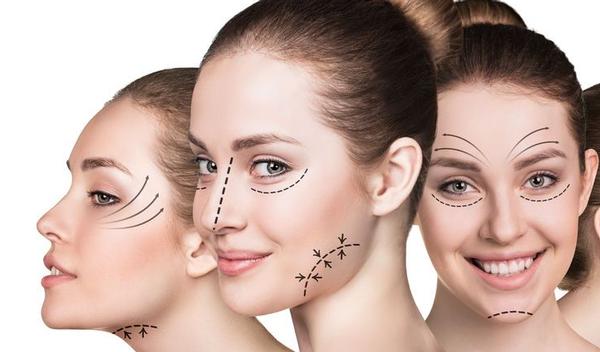
Cosmetic surgery in Tunisia in 2026: what are Swiss residents asking?
In short: Cosmetic surgery in 2026 is shaped by three things: a clear rise in lifting procedures, a growing number of patients who have lost weight with GLP-1 medicines, and more people travelling abroad, with Tunisia among the countries that treat the highest share of foreign patients. For a Swiss resident, the operation itself is only half the decision; the other half is who operates, how long you stay, what your insurance will and will not do, and how you are followed up once you are back in Geneva, Zurich, Basel or Lausanne. With Medespoir, a surgical package in Tunisia costs roughly 60% less than the same operation in Switzerland, and the exact figure comes in a free, personalised quote within 48 hours. This guide answers the questions people actually ask about face, breast and body surgery, and what Tunisia changes for each of them.
This article is general information and does not replace a medical opinion. Only a surgeon who has examined you can tell you whether an operation is suitable.
Contents
- What changed in cosmetic surgery in 2025 and 2026?
- Weight-loss injections and surgery: the questions everyone is asking
- Face: eyelids, nose, facelift and fat grafting
- Breasts: augmentation, lift and implant questions
- Body: liposuction, tummy tuck, BBL and lifts
- Why Tunisia, and is it safe?
- How to choose a surgeon and a clinic in Tunisia
- Cost, insurance and what the package covers
- How long to stay and when you can fly home
- Back in Switzerland: follow-up and complications
- Sources
- Frequently asked questions
What changed in cosmetic surgery in 2025 and 2026?
The short answer is that patients are asking for restoration more than transformation. The two large annual statistics reports published in autumn 2026 both point in the same direction: lifts, breast lifts and eyelid surgery are growing, while some injectable treatments are flat or falling.
What do the latest statistics show?
The American Society of Plastic Surgeons (ASPS) published its 2025 Procedural Statistics Report on 1 September 2026. Cosmetic procedure volume rose by 7% compared with 2024. Lifting procedures led the growth: forehead and brow lifts were up 29%, upper body lifts 22%, arm lifts and neck lifts 21% each, thigh lifts 20%, facelifts 13% and breast lifts 8%. Facial fat grafting recorded the largest single-year gain of any procedure tracked, at 39%. These are American figures, but American trends tend to reach European clinics within a year or two, and they match what surgeons see in Swiss and Tunisian consultations.
The International Society of Aesthetic Plastic Surgery (ISAPS) released its Global Survey for 2025 on 29 September 2026. It counts about 35.2 million aesthetic procedures worldwide, of which nearly 17.9 million were surgical. The top five surgical procedures were eyelid surgery, liposuction, breast augmentation, breast lift and abdominoplasty. Breast lift (mastopexy) showed the sharpest rise, up 48%. The previous ISAPS survey, published in June 2025, had already reported that eyelid surgery had overtaken liposuction as the most performed surgical procedure in the world for the first time.
Where does Tunisia stand in these figures?
The ISAPS 2025 survey names Tunisia, together with the Dominican Republic and Mexico, as one of the three countries with the highest proportion of foreign patients. In other words, a large share of the people operated on in Tunisian aesthetic practices come from abroad, mostly from French-speaking Europe. On 3 October 2026, the Tunisian health minister told the national news agency that the country receives more than 500,000 foreign patients a year for surgical procedures, across all specialties. That figure comes from an official statement rather than a published audit, so treat it as an order of magnitude, but it shows how established medical travel has become in the country.
| Report | Published | Key finding for patients |
|---|---|---|
| ISAPS Global Survey 2024 | June 2025 | Eyelid surgery becomes the most performed surgical procedure worldwide |
| ASPS Procedural Statistics 2025 | 1 September 2026 | Cosmetic procedures up 7%; brow lifts up 29%; facial fat grafting up 39%; 82% of surgeons received GLP-1-related consultation requests |
| ISAPS Global Survey 2025 | 29 September 2026 | Breast lift up 48%; hyaluronic acid injections down 25%; Tunisia among the three countries with the highest share of foreign patients |
Has anything changed in Swiss rules?
For purely cosmetic surgery, nothing fundamental has changed: Swiss basic health insurance (KVG/LAMal) does not pay for operations whose only aim is to change appearance, whether you have them in Switzerland or abroad. What has changed is the regulation of medical devices. Since 1 July 2026, manufacturers and their authorised representatives must register medical devices in Swissmedic’s new swissdamed database. Breast implants are medical devices, so this matters indirectly: the traceability of what is implanted in you is getting tighter. Whatever country you are operated in, keep your implant card and operative report, because a Swiss doctor will need them one day.
Weight-loss injections and surgery: the questions everyone is asking
GLP-1 medicines such as semaglutide (Wegovy, Ozempic) and tirzepatide (Mounjaro) have changed who walks into a plastic surgeon’s office. In the ASPS 2025 report, 82% of member surgeons said they had received consultation requests related to GLP-1 use. The society is careful to add that its figures do not prove a causal link with any specific procedure. Still, the questions below now come up in almost every consultation.
I have lost a lot of weight with an injection. When can I have body contouring?
When your weight has been stable for several months, not while it is still falling. A surgeon plans skin removal on the body you will keep: if you lose another eight kilos after a tummy tuck or an arm lift, the skin loosens again and the result is lost. Most surgeons want to see a stable weight for at least three to six months, and longer after a very large loss. They will also check your nutrition, because rapid weight loss can leave you short of protein, iron or vitamins, and those deficits slow wound healing. Bring your weight history and the name and dose of the medicine to the first consultation.
Do I need to stop my GLP-1 medicine before an operation?
Do not decide this alone, and never hide the treatment. GLP-1 medicines slow the emptying of the stomach, which matters for general anaesthesia because food left in the stomach can be inhaled while you are asleep. The anaesthetist will tell you whether to pause the medicine, for how long, and how long to fast before surgery. When you fill in the medical questionnaire for Tunisia, list the medicine, the dose and the day of your last injection. A team that does not ask you about it is a warning sign.
What is « Ozempic face », and does it need surgery?
The expression describes the hollow, slightly older look some people get after rapid weight loss, because the face loses fat in the cheeks, temples and around the eyes. It is not a medical diagnosis. Depending on the degree, the answer may be nothing at all, volume restoration with injectables or fat grafting, or a facelift when skin has become loose. The rise in facial fat grafting in the ASPS report is partly explained by this demand. A surgeon will usually suggest waiting until your weight has settled before treating the face, for the same reason as for the body.
Is it safe to buy weight-loss injections online before or after surgery?
No. On 26 August 2025, Swissmedic warned against falsified and misleading « GLP-1 » products sold online: capsules and drops with fake logos, an « all natural » injectable that actually contained semaglutide, insulin pens relabelled as GLP-1 medicines that caused life-threatening hypoglycaemia, and an unauthorised retatrutide kit. In June 2026, a joint campaign with Swiss Sport Integrity and the customs authority checked 46 parcels of peptide preparations, most of them sent from Poland. GLP-1 medicines are prescription-only in Switzerland. Use them under the supervision of your doctor, and tell your surgeon what you take.
Face: eyelids, nose, facelift and fat grafting
Why is eyelid surgery now the most popular operation?
Because it gives a visible change for a relatively short recovery. Upper eyelid surgery (blepharoplasty) removes excess skin, and sometimes a little fat, that makes the eyes look heavy or tired. Lower eyelid surgery deals with bags and hollows under the eyes. The scar of the upper lid hides in the natural fold. Most people are presentable with sunglasses after about ten days, although bruising varies. In Tunisia, Medespoir plans an indicative stay of five to six days for blepharoplasty. If your upper lids are so heavy that they reduce your field of vision, Swiss basic insurance may pay for the operation in Switzerland after an eye test; that route is closed if you have it done abroad as a planned procedure, so check it first. See the eyelid surgery page (in French).
Is rhinoplasty abroad a good idea?
It can be, provided you accept two facts. First, the final shape of a nose takes a long time to settle: most swelling goes down in the first weeks, but the tip can keep refining for a year or more. You will therefore judge the result at home, not in Tunisia. Second, rhinoplasty has one of the higher revision rates in aesthetic surgery, so ask the surgeon how often their patients need a touch-up and how a revision would be organised. The indicative stay in Tunisia is six to seven days, enough to remove the splint before you fly. Ultrasonic (piezo) rhinoplasty, which shapes bone with ultrasound rather than chisels, is offered for some cases; it can reduce bruising but does not suit every nose. Details are on the rhinoplasty page (in French).
At what age does a facelift make sense?
There is no right age, only a right indication: loose skin and sagging tissues in the lower face and neck that injections can no longer correct. Patients range from their mid-forties to their seventies. In the ASPS report, people aged 66 and over posted the largest increase in procedure volume of any age group, up 24%, which shows how much older patients now consider surgery. Your general health matters more than your birth year: blood pressure, diabetes, smoking and blood-thinning medicines all change the risk. In Tunisia, a cervicofacial lift requires an indicative stay of seven to ten days. If you are trying to understand the difference between deep plane and SMAS techniques, read our dedicated article Deep plane or SMAS facelift: which is right for you? rather than looking for the answer here.
What is facial fat grafting, and why is it growing?
Fat grafting takes a small amount of your own fat, usually from the abdomen or thighs, purifies it and injects it into areas that have lost volume: temples, cheeks, under the eyes, jawline. It is often combined with a facelift, because a lift repositions tissue but does not add volume. Part of the injected fat does not survive, so the surgeon slightly overcorrects or plans a second session. The advantage over fillers is that the surviving fat is permanent and natural; the drawback is that it is less predictable and cannot be dissolved. Its rise in 2025 is linked to patients who have lost facial volume through age or weight loss.
Breasts: augmentation, lift and implant questions
Why are breast lifts increasing so fast?
ISAPS reported a 48% rise in breast lifts in 2025, and the ASPS saw an 8% increase. Several explanations are given: more women ask for a natural result rather than a large volume; weight loss, including medicine-assisted loss, leaves breasts emptier and lower; and women increasingly treat the after-effects of pregnancy and breastfeeding. A lift removes excess skin and raises the nipple and breast tissue; it does not add volume. If you want both a lift and more fullness, the surgeon may combine the lift with an implant or with fat transfer. The indicative stay in Tunisia for breast surgery, augmentation or lift, is six to seven days.
Do I need an implant or is a lift enough?
Ask yourself what you dislike most when you look in the mirror. If the problem is that the breast sits low and the nipple points down, a lift alone may be enough. If the breast is empty in the upper part even when you lift it with your hand, you may need volume as well. A quick test surgeons use: if your nipple sits below the fold under your breast, an implant alone will not correct it and may make the breast look like it is sliding off the implant. The consultation in Tunisia confirms the plan after examination. Read the breast lift page (in French) and the breast augmentation page (in French).
How long do breast implants last?
Implants have no fixed expiry date, but they are not lifetime devices either. The longer you have them, the more likely you are to need another operation at some point, for capsular contracture (hardening of the scar tissue around the implant), rupture, displacement or simply because your body has changed. Many women never need a change for ten or fifteen years, some sooner. That is why you should keep your implant card, which records the brand, model, size and serial number. With Medespoir, the implants and the implant card are included in the Tunisian package. A doctor in Switzerland will ask for that card when you have a mammogram, an MRI or a future operation.
What about BIA-ALCL and « breast implant illness »?
BIA-ALCL is a rare lymphoma that develops in the scar capsule around an implant, mostly with textured-surface implants. It usually shows up years later as a sudden swelling of one breast, and it is generally treated by removing the implant and capsule. « Breast implant illness » is a term patients use for a range of general symptoms, such as fatigue or joint pain, that they link to their implants; the science is still debated, and some women feel better after removal. Neither is a reason for panic, but both are reasons to ask your surgeon which implant surface they use and why, and to see a doctor if one breast swells years after surgery.
Can I breastfeed after breast surgery?
Often yes, but not always. Implants placed through an incision in the fold under the breast usually leave the milk ducts intact. A lift or a reduction that moves the nipple can reduce the ability to breastfeed, depending on the technique. If you plan a pregnancy in the next few years, say so: many surgeons advise waiting, because pregnancy and breastfeeding will change the result anyway.
Body: liposuction, tummy tuck, BBL and lifts
How much fat can liposuction remove?
Liposuction is a contouring procedure, not a weight-loss method. Surgical societies treat the removal of more than about five litres of fat and fluid as large-volume liposuction, which needs closer monitoring and often an overnight stay. Your surgeon will set a safe limit depending on your weight, your health and the areas treated. Techniques such as VASER (ultrasound-assisted), BodyTite (radiofrequency to tighten the skin) or high-definition liposculpture change how the fat is removed and how the skin retracts, but they do not change the basic rule: skin that has lost its elasticity will not tighten completely, and in that case a lift is the real answer. In Tunisia, the indicative stay is five to six days for one or two areas and six to eight days for HD liposculpture. See the liposuction page (in French).
Is a Brazilian butt lift safe now?
Safer than it was, but only when strict rules are followed. The serious risk of a BBL is fat embolism: if fat is injected into or under the gluteal muscle, it can enter large veins and travel to the lungs, which can be fatal. Since 2018, international plastic surgery societies have recommended injecting fat only into the layer under the skin, never into the muscle, and many surgeons now use real-time ultrasound to see exactly where the cannula is. Medespoir offers a « Smart BBL » with ultrasound guidance in Tunisia, with an indicative stay of seven to eight days. Ask any surgeon three questions: in which layer do you inject, do you use ultrasound, and what is the maximum volume you inject per side?
Tummy tuck or liposuction: how do I know which I need?
Pinch the skin of your lower belly. If you mostly hold fat, and the skin springs back, liposuction may be enough. If you can grab a fold of loose skin, if you have stretch marks below the navel, or if your abdominal muscles separated during pregnancy (diastasis), a tummy tuck is the operation that addresses those problems. A tummy tuck leaves a scar low on the abdomen, usually hidden by underwear. The indicative stay in Tunisia is seven to ten days. For the recovery week by week, see Tummy tuck in Tunisia: what does recovery look like week by week?
Why are arm, thigh and body lifts suddenly in the news?
Because they are the operations that deal with what is left after a large weight loss, and more people are losing a large amount of weight. In the ASPS 2025 report, upper body lifts rose 22%, arm lifts 21% and thigh lifts 20%. These are longer operations with long scars, and the trade-off has to be clear: you exchange loose skin for a scar. Combined procedures in Tunisia require an indicative stay of eight to ten days. See the arm lift page (in French).
Can I combine several operations in one trip?
Sometimes, and it is one of the reasons people travel: one anaesthetic, one recovery, one trip. A breast lift with a tummy tuck (part of what is called a mommy makeover) or a facelift with eyelid surgery are classic combinations. The limits are the total operating time, the blood loss and your general health; beyond a certain duration, the risk of blood clots and complications increases, and a good surgeon will split the programme into two stages rather than push it into one. Ask how long the combined operation will last and why that combination was chosen. The mommy makeover page (in French) explains common combinations.
Want to know what your plan would look like? Send your photos and your questions to Medespoir. You receive a free, personalised quote within 48 hours, with the name of the clinic and the surgeon, the length of stay and what the package includes. Request your free quote.
Why Tunisia, and is it safe?
Why do so many people from Switzerland choose Tunisia?
Mostly for the combination of distance, language and cost. Direct flights from Geneva and Basel-Mulhouse take about two hours; from Zurich, you may fly direct or with a connection depending on the season. Medical teams speak French fluently, and consultations and medical documents are in French, which suits French-speaking Swiss and many expats who live in Romandy. And a Medespoir package costs roughly 60% less than the equivalent operation in Switzerland. Tunisia has also built a long tradition of aesthetic surgery for European patients, which is why it appears among the countries with the highest share of foreign patients in the ISAPS survey.
I don’t speak French. Will that be a problem?
It is a fair question for an English-speaking expat, and it deserves an honest answer. In Tunisia, the working language of clinics is French, and Arabic with local staff. The UK government’s travel advice notes that some medical staff in Tunisia speak only limited English. Medespoir’s consultations and documents are in French. If you are not comfortable in French, say so in your quote request and ask what language support is available for your consultation, your consent form and your discharge instructions. Do not sign a consent form you do not fully understand: ask for an explanation, or bring a French-speaking companion. The package includes full board at the hotel for one companion, which helps here.
Is Tunisia safe for cosmetic surgery?
Safety depends on the clinic and the surgeon far more than on the country. Tunisia has a public hospital system and a large private sector with experienced plastic surgeons, many trained in France. The risks of surgery are the same everywhere: infection, bleeding, blood clots, poor scarring, anaesthesia complications. What changes abroad is that you are far from home during recovery and your Swiss doctor was not involved in the operation. That is why the questions below, about the surgeon, the clinic and the follow-up, matter more than the destination. For the country itself, check the travel advice of the Swiss Federal Department of Foreign Affairs (FDFA) before booking; its helpline is reachable 365 days a year on +41 800 24-7-365.
What happens if I need emergency care in Tunisia?
Within the Medespoir package, the surgical team that operated on you and the clinic handle the post-operative period, and the hotel care is included. Outside that, remember that there is no free medical care for foreign nationals in Tunisia: private clinics expect payment on the spot. The emergency number for an ambulance is 190. Swiss basic insurance pays for emergency treatment abroad only up to twice the amount the same treatment would have cost in Switzerland, and it does not cover the consequences of a planned treatment. A travel insurance policy with medical repatriation is therefore recommended; check whether it excludes complications of cosmetic surgery. Our French article on travel insurance for surgery in Tunisia goes into the details.
How to choose a surgeon and a clinic in Tunisia
How do I check that a Tunisian surgeon is qualified?
Ask for the surgeon’s full name, specialty and registration with the Tunisian Medical Council (Conseil national de l’Ordre des médecins de Tunisie), and check that the specialty is plastic, reconstructive and aesthetic surgery, not a general title. Medespoir’s surgeons are registered with the Ordre des médecins, and the name of your surgeon and of the clinic appear on your quote from the start; you can read their profiles on the surgeons page (in French). Look at the surgeon’s training, how long they have been operating, and how often they perform the procedure you want. A surgeon who does a hundred facelifts a year and a surgeon who does five are not the same choice.
What should I ask about the clinic?
Medespoir encourages patients to ask these questions of any clinic, including its own: in which clinic will I be operated, at what address; is there an anaesthesia team and a recovery room on site; how many nights in hospital are planned; what happens if there is a complication during my stay, and after my return? Medespoir’s own clinics in Tunisia include the Clinique Medespoir in Tunis, near Tunis-Carthage airport, with single rooms, an operating theatre and a recovery room. You can find out more on the clinics page (in French).
What are the warning signs of a bad offer?
| Warning sign | Why it matters | What a serious offer looks like |
|---|---|---|
| You do not know who will operate | The surgeon is the main factor of safety and result | Surgeon and clinic named on the quote |
| A price without a medical review of your photos | The plan, and therefore the cost, depends on your anatomy | Photos and medical history reviewed before the quote |
| Pressure to decide quickly or « today only » discounts | Surgery is a medical decision, not a flash sale | Time to think, and the surgeon can refuse or postpone |
| No consultation before the operation | The final decision needs an examination in person | Pre-operative consultation and tests on site, included |
| A stay that is too short to fly safely | You leave before the first check or the removal of drains | Stay planned for the procedure, with a check and fit-to-fly sign-off |
| No documents for your return | Your Swiss doctor will not know what was done | Operative report and, for implants, the implant card |
Does a remote consultation replace the in-person one?
No, it prepares it. Photos and a video call allow the surgeon to judge whether the operation makes sense and to give you a realistic quote. The final decision is made after the consultation and the tests in Tunisia, and the surgeon can still change, postpone or advise against the operation at that stage. That is a safety feature, not a problem. If you want to know how the remote step works, our French article on the remote consultation describes it.
Cost, insurance and what the package covers
How much cheaper is cosmetic surgery in Tunisia than in Switzerland?
With Medespoir, a surgical package in Tunisia costs roughly 60% less than the same operation in Switzerland. These are average gaps; the precise amount depends on the operation, the technique, the length of stay and your medical file, which is why the only reliable figure is the one in your free, personalised quote, sent within 48 hours. More detail is on the prices page (in French).
What exactly is included in the Tunisian package?
The Medespoir package in Tunisia includes the pre-operative consultation, the tests, the operation, the whole team (surgeon, anaesthetist, surgical assistant), the operating theatre, the hospital stay, the implants with their implant card where relevant, the compression garment, daily care at the hotel, the final check and the fit-to-fly clearance, the operative report, full-board accommodation for you and one companion, all transfers, and remote follow-up after your return to Switzerland. What you pay separately: the flight, personal expenses, any extension of your stay for convenience, care received in Switzerland after your return, travel insurance (recommended) and bank charges.
Does Swiss basic insurance pay for anything?
For cosmetic surgery, no. Basic insurance under the KVG/LAMal covers treatment of illness, not changes to appearance, and it does not pay for planned treatment abroad, apart from a few specific exceptions that do not concern aesthetic surgery. Some operations have a medical side, such as a breast reduction for back pain, eyelid surgery that blocks vision or reconstruction after cancer; those may be covered in Switzerland under conditions and with prior approval, but not if you have them done abroad as a planned treatment. If you think your case has a medical dimension, discuss it with your insurer before you choose a country. Our article on how cosmetic surgery works in Switzerland for expats explains the Swiss side.
Will my supplementary insurance help?
Rarely for the operation itself. Supplementary policies (VVG) are private contracts, and most exclude cosmetic surgery. Some include a small contribution for treatment abroad or for specific medical indications. Read the general terms or ask your insurer in writing; a written answer avoids surprises.
How long to stay and when you can fly home
How many days do I need in Tunisia?
It depends on the operation. The table below gives Medespoir’s indicative durations; your quote states the exact length for your case, and the stay page (in French) describes how the stay is organised.
| Procedure | Indicative stay in Tunisia |
|---|---|
| Eyelid surgery, ear correction, chin surgery | 5 to 6 days |
| Rhinoplasty | 6 to 7 days |
| Liposuction, one or two areas | 5 to 6 days |
| HD liposculpture | 6 to 8 days |
| Breast augmentation or lift, gynaecomastia | 6 to 7 days |
| Smart BBL | 7 to 8 days |
| Tummy tuck | 7 to 10 days |
| Cervicofacial lift | 7 to 10 days |
| Lipoedema surgery | 6 to 9 days |
| Combined procedures | 8 to 10 days |
When is it safe to fly after surgery?
When the surgeon has seen you at the final check and signed you off. A flight of about two hours is short, which is one of Tunisia’s advantages compared with long-haul destinations, but any flight after surgery slightly increases the risk of blood clots in the legs. The usual precautions are to wear your compression garment or stockings as instructed, drink water, walk in the aisle if possible, and avoid alcohol and sleeping tablets on board. If you have a history of thrombosis, a clotting disorder or take hormonal contraception, tell the team; they may prescribe an injection to thin the blood. Book a seat with legroom and a flexible return ticket if you can.
How long should I take off work?
Count the stay in Tunisia plus some time at home. For eyelid surgery or limited liposuction, an office job can often resume a week or so after you return; for a tummy tuck, a facelift or combined surgery, plan two to four weeks in total, and longer for physical work. Your Swiss employer cannot ask what operation you had, but your doctor’s certificate will be needed if you are off sick beyond the period covered by your holidays.
Back in Switzerland: follow-up and complications
Who follows me up once I am home?
The Medespoir package includes remote follow-up after your return: you send photos and questions, and the team that operated on you answers. For anything that needs a physical examination, such as removing stitches, checking a wound or draining a seroma, you will see a doctor in Switzerland. Before you leave, tell your GP or gynaecologist about the operation, and bring back the operative report so they know exactly what was done. If you do not have a family doctor yet, which is common for expats in their first years, find one before you travel.
What if something goes wrong after my return?
Contact the Medespoir team first, with photos, and see a doctor in Switzerland if you have fever, increasing pain, redness spreading around a wound, a swollen calf or shortness of breath; the last two require emergency care straight away. Care received in Switzerland is billed under the usual rules, with your deductible (franchise) and co-payment. Our French article Complication after surgery in Tunisia: who follows you up in Switzerland? explains the steps in detail.
When will I see the final result?
Rarely before three months, and often later. Breast implants settle over three to six months; noses keep refining for a year or more; scars mature over twelve to eighteen months, going from pink to pale. Swelling after liposuction can last several months. Take photos at fixed intervals in the same light; they will help you, and your surgeon, judge progress objectively.
Ready to plan with real figures? Medespoir sends a free, personalised quote within 48 hours, naming the surgeon, the clinic and the length of stay, with savings of roughly 60% compared with Switzerland. Get your free quote.
Sources
- American Society of Plastic Surgeons, « Lift procedures led growth as demand for restoration drove plastic surgery in 2025 », press release, 1 September 2026: plasticsurgery.org
- ISAPS Global Survey 2025, press release reproduced by The Korea Herald / PR Newswire, 29 September 2026: koreaherald.com
- ISAPS Global Survey 2024, full report and press releases, June 2025: isaps.org
- La Presse de Tunisie, « Tourisme médical : plus de 500 000 patients étrangers », 3 October 2026: lapresse.tn
- Swissmedic, warning against falsified and misleading « GLP-1 » weight-loss products, 26 August 2025: swissmedic.ch
- Swissmedic, medical devices and swissdamed registration: swissmedic.ch
- Federal Act on Health Insurance (KVG/LAMal): fedlex.admin.ch
- UK Foreign, Commonwealth and Development Office, Tunisia travel advice, health section: gov.uk
- Swiss FDFA, travel advice for Tunisia: eda.admin.ch
- NHS, cosmetic surgery abroad: nhs.uk
- Medespoir, clinics, stay and prices pages: clinique.php, sejour.php, tarifs.php
Frequently asked questions
Is cosmetic surgery in Tunisia cheaper than in Turkey?
It depends on the procedure, the technique and the clinic, so there is no single answer. Medespoir’s Tunisian package is roughly 60% cheaper than Switzerland, and your quote can compare Tunisia and Turkey for your operation.
Can I bring someone with me?
Yes. The Tunisian package includes full-board hotel accommodation for one companion, which is useful for the first days after surgery and, for English speakers, as a second pair of ears during consultations.
Do I need a visa to go to Tunisia for surgery?
It depends on your passport, not on your Swiss residence permit. Our article Travelling from Switzerland to Tunisia for surgery explains the rules for Swiss, British and other nationals.
How soon can I have surgery after stopping a GLP-1 medicine?
There is no single rule: the anaesthetist decides whether and when to pause the medicine before anaesthesia, and the surgeon wants your weight to be stable for several months before body contouring.
Is it better to have eyelid surgery in Switzerland if my vision is affected?
If heavy upper lids reduce your field of vision, check with your insurer first: Swiss basic insurance may cover the operation in Switzerland under conditions, which it will not do for a planned operation abroad.
What documents should I bring back to Switzerland?
The operative report, the list of medicines prescribed, the discharge instructions and, if you received implants, the implant card. Give a copy to your Swiss doctor.
Can the surgeon refuse to operate on me once I am in Tunisia?
Yes. Nothing is final before the in-person examination and tests, and the surgeon can adapt, postpone or advise against an operation if it is not safe. This protects you.
Can I combine cosmetic surgery with a holiday?
Plan the recovery as the main purpose of the trip: no swimming, no sunbathing on scars and limited exertion for several weeks. If you want a holiday, take it before the operation rather than after.